
Our ears are small but complex organs responsible for one of the most vital human senses — hearing. They not only help us perceive sound but also play a key role in maintaining balance. However, ear-related problems such as earwax buildup, infections, and eardrum damage are common and often go unnoticed until they cause significant discomfort or hearing loss.
That’s where otoscopy becomes essential. Otoscopy is a simple, quick, and non-invasive examination procedure that allows doctors and hearing care professionals to look inside the ear canal and evaluate the health of the ear structures. Using a device called an otoscope, professionals can detect early signs of ear infections, wax impaction, eardrum perforation, or other abnormalities.
In this article, we’ll explore why otoscopy is important for ear health and hearing, how it’s performed, what conditions it can reveal, and why regular ear check-ups can prevent long-term hearing damage.
What Is Otoscopy?
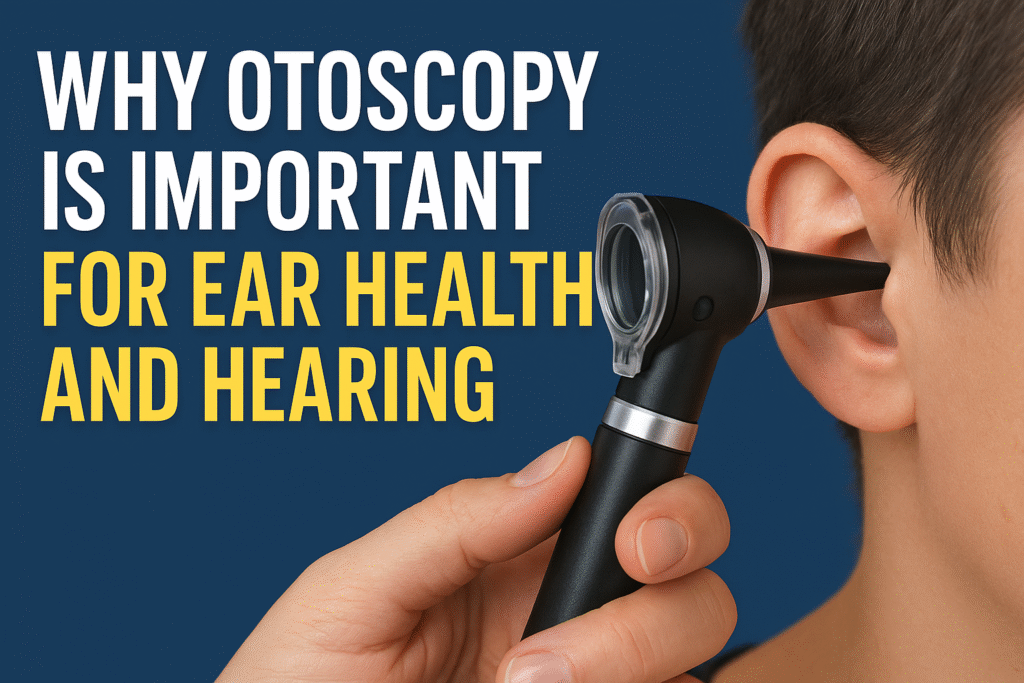
Otoscopy is a diagnostic examination in which a healthcare provider uses an otoscope (also known as an auriscope) to look inside the ear canal and view the tympanic membrane (eardrum).
The otoscope is equipped with:
- A light source that illuminates the ear canal.
- A magnifying lens that allows clear visualization of internal ear structures.
- A speculum, a cone-shaped tip that gently enters the ear opening.
The purpose of otoscopy is to detect abnormalities that may affect hearing or cause ear discomfort. It is one of the first steps in any hearing test or ENT consultation, and it’s completely safe and painless.
The Anatomy of the Ear – Why It Matters
Before understanding why otoscopy is crucial, it helps to know a bit about ear anatomy. The human ear is divided into three parts:
- Outer Ear – Includes the pinna (visible part) and the ear canal. It channels sound waves toward the eardrum.
- Middle Ear – Contains three tiny bones (ossicles) that amplify sound vibrations.
- Inner Ear – Converts these vibrations into electrical signals for the brain to interpret.
A problem in any of these parts can affect hearing. Otoscopy focuses mainly on the outer and middle ear, providing valuable insight into their condition.
How an Otoscopy Examination Is Performed
An otoscopy exam is simple, quick, and usually completed in just a few minutes. Here’s what typically happens during the procedure:
- Preparation
The patient sits comfortably, and the clinician explains the procedure. The ear is checked externally for swelling, redness, or discharge. - Insertion of Otoscope
The healthcare professional gently pulls the outer ear upward and backward (in adults) or downward (in children) to straighten the ear canal. Then, the otoscope’s speculum is carefully inserted. - Visual Examination
With light and magnification, the examiner looks inside the canal for:- Wax buildup
- Inflammation or infection
- Fluid or discharge
- Foreign objects
- Damage or perforation of the eardrum
- Assessment
Based on the observation, the professional may recommend ear cleaning, further tests (like an audiogram or tympanometry), or medical treatment.
What Conditions Can Otoscopy Detect?
Otoscopy is an invaluable diagnostic tool because it can help identify a wide range of ear health issues at an early stage. Some common conditions include:
1. Earwax Impaction
Excess earwax (cerumen) can block the ear canal, causing temporary hearing loss, itching, or discomfort. Otoscopy allows professionals to see how deep the wax is and whether it needs removal.
2. Otitis Media (Middle Ear Infection)
One of the most common ear problems, especially in children. Otoscopy can reveal fluid buildup, redness, or bulging of the eardrum — all signs of infection.
3. Otitis Externa (Swimmer’s Ear)
This is an infection of the outer ear canal caused by bacteria or fungi, often due to moisture. Otoscopy can show inflammation, redness, and scaling.
4. Eardrum Perforation
A hole or tear in the eardrum can occur due to infections, loud noises, or sudden pressure changes. The otoscope helps detect perforations and assess their size and severity.
5. Foreign Objects
Children sometimes insert small objects like beads or paper into their ears. Otoscopy helps in detecting and safely removing these objects.
6. Cholesteatoma
This is a noncancerous skin growth in the middle ear behind the eardrum. Early detection through otoscopy can prevent complications such as hearing loss or infection spread.
7. Fluid in the Middle Ear
Otoscopy can identify clear or cloudy fluid behind the eardrum, which might indicate chronic infection or Eustachian tube dysfunction.
Why Otoscopy Is Important for Hearing Health
1. Early Detection of Hearing Problems
Many hearing problems begin with minor ear issues that can be easily treated if detected early. Regular otoscopic exams can identify infections, blockages, or eardrum damage before they lead to permanent hearing loss.
2. Helps in Accurate Diagnosis
Otoscopy gives audiologists and ENT specialists a direct view of the ear canal and eardrum, allowing accurate diagnosis and tailored treatment plans.
3. Prevents Complications
Untreated ear infections or wax buildup can cause chronic pain, tinnitus (ringing in the ear), or irreversible hearing loss. Regular otoscopic checks prevent these complications.
4. Safe for All Ages
Otoscopy is completely safe and suitable for both adults and children. Pediatric otoscopy plays a key role in diagnosing common ear infections in kids.
5. Supports Hearing Aid Fitting
Before fitting hearing aids, audiologists perform otoscopy to ensure the ear canal is clean and healthy. Any wax or infection must be treated before fitting the device.
Otoscopy in Children – A Vital Step in Early Hearing Care
Children are especially vulnerable to ear infections and fluid buildup due to the structure of their Eustachian tubes.
Regular otoscopy is essential for:
- Detecting otitis media (common in children under 5)
- Monitoring ear development
- Ensuring healthy hearing during speech and learning stages
Pediatricians often recommend otoscopy as part of routine check-ups, especially if a child shows signs of ear pulling, irritability, fever, or hearing difficulties.
Advanced Otoscopy: Video and Digital Otoscopes
Modern technology has improved traditional otoscopy. Video otoscopes and digital otoscopes now allow both the practitioner and patient to view real-time images of the ear canal on a screen.
Benefits of Digital Otoscopy:
- High-resolution imaging for accurate diagnosis
- Easy record-keeping for patient history
- Enhanced patient education (visual explanation of ear issues)
- Better monitoring of treatment progress
Clinics such as Earsage Hearing Aid Centre, Guwahati, and North Bengal Hearing Aid Centre use modern otoscopy tools for precise and safe ear evaluations.
How Often Should You Get an Otoscopy?
The frequency of otoscopic examinations depends on your age, ear health, and medical history.
| Category | Recommended Frequency |
|---|---|
| Healthy adults | Once every 1–2 years |
| Hearing aid users | Every 6 months |
| Children | During regular pediatric visits |
| People with recurrent ear infections | As advised by ENT |
| Swimmers or frequent travelers (air pressure exposure) | Every 6–12 months |
Regular ear check-ups can prevent issues before they become serious, ensuring consistent hearing health.
The Role of Otoscopy in Hearing Aid Centres
At hearing aid centers, otoscopy is often the first step in hearing evaluation.
Before any hearing test (audiometry), professionals ensure that the ear canal is free from obstructions like earwax.
If wax or infection is detected, it’s treated before proceeding with hearing aid fitting. This ensures:
- Clear sound transmission
- Accurate hearing test results
- Better comfort when wearing the hearing aid
Hearing aid specialists at Earsage Hearing Aid Centre Guwahati always conduct otoscopy before any fitting or programming session.
Patient Education: What You Can Learn from Otoscopy
Otoscopy is not just diagnostic — it’s educational. Seeing your own ear canal or eardrum on a video screen helps you understand:
- How earwax forms
- Why ear hygiene matters
- How infections can affect hearing
- Why you should avoid inserting cotton swabs
When patients see the condition of their ears firsthand, they become more proactive about ear care.
Common Myths About Ear Health and Otoscopy
Myth 1: Cleaning ears with cotton buds is safe.
Fact: Cotton buds can push wax deeper into the ear canal and even damage the eardrum. Otoscopy helps detect such issues.
Myth 2: Earwax is dirty and should always be removed.
Fact: A small amount of wax is natural and protective. Only excessive wax needs removal.
Myth 3: Hearing loss is always permanent.
Fact: Many hearing issues caused by wax or infection are reversible when treated early through otoscopic detection.
Myth 4: You only need ear check-ups if you have pain.
Fact: Many ear issues are painless. Routine otoscopy helps identify problems before symptoms appear.
Ear Care Tips to Maintain Healthy Hearing
- Avoid inserting objects into your ears — including cotton swabs.
- Keep ears dry after swimming or showering.
- Get regular otoscopic check-ups, especially if you wear hearing aids.
- Seek professional help if you experience hearing changes, ringing, or pain.
- Use ear protection in noisy environments.
- Avoid overuse of ear drops unless prescribed.
When to See an ENT or Audiologist
You should book an otoscopic ear examination if you notice:
- Sudden hearing loss
- Persistent ear pain or pressure
- Itching or discharge
- Ringing (tinnitus)
- Dizziness or balance problems
- Blocked ear sensation
An otoscopy can quickly identify the cause and guide the right treatment.
Otoscopy is one of the simplest yet most powerful tools in maintaining ear health and hearing wellness. This quick, painless procedure can detect infections, wax buildup, eardrum issues, or other conditions before they cause lasting damage.
Whether you are experiencing hearing issues, using hearing aids, or simply want to maintain good ear hygiene, regular otoscopic check-ups are essential.
Clinics like Earsage Hearing Aid Centre Guwahati recommend including otoscopy in every routine hearing assessment to ensure your ears stay healthy and your hearing remains clear.